
Lenses
Sony FE 50mm F1.8
My 50 mm has one focal length and two opinions about a lifeguard tower. In one frame you can see the weather coming. In the other you can read the street name.
Two positions with a 50 mm prime
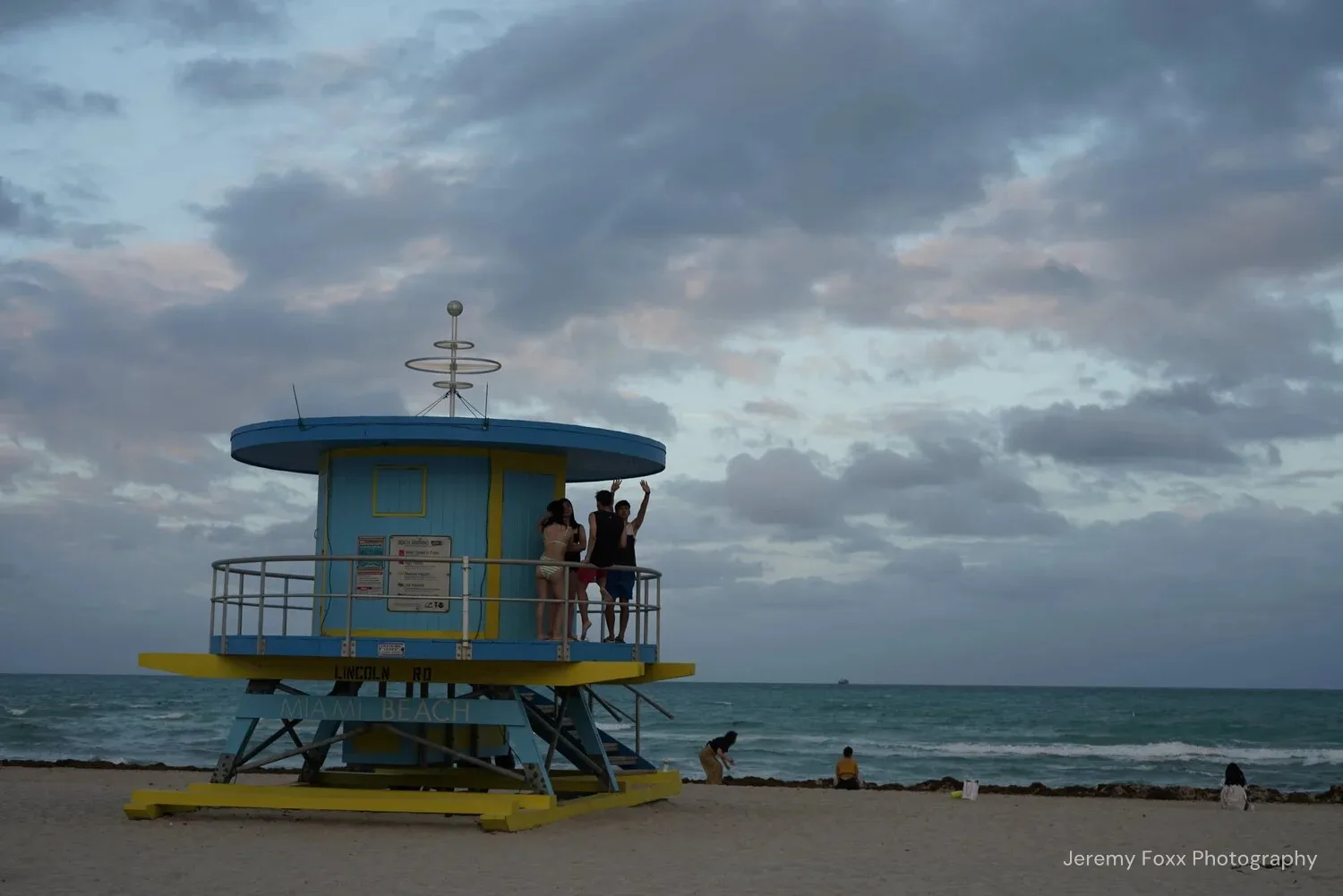
Room for the sky
Find the small figures on the tower and the broad band of sky above the roof. The file records 50 mm, f/8 and 1/60 second. From this distance the tower and the approaching weather share the picture.
Camera settings
Sony α7R II (ILCE-7RM2) · FE 50mm F1.8 · 50 mm · f/8 · 1/60 s · ISO 100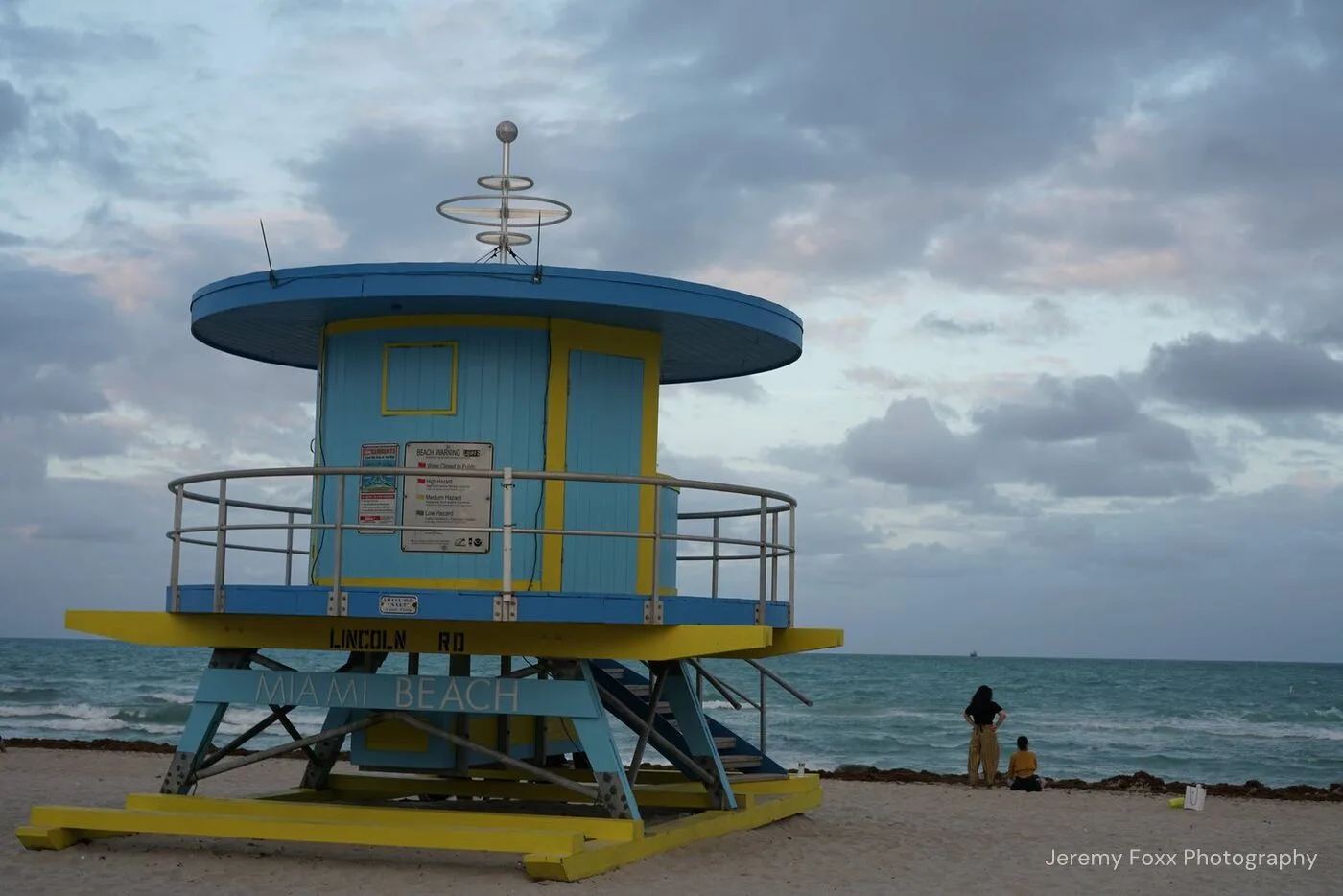
Closer to the tower
The roof and stairway occupy more of the frame here. The focal length and aperture are still 50 mm and f/8, with a shutter time of 1/40 second. For your own pair, leave the lens in place and walk until the roof reaches the height you want in the frame.
Camera settings
Sony α7R II (ILCE-7RM2) · FE 50mm F1.8 · 50 mm · f/8 · 1/40 s · ISO 100Where it helps
A prime is a lens with one focal length. This one stays at 50 mm. I used it for two pictures of the same lifeguard tower. In the looser frame you notice the sky gathering over the roof. In the tighter one you can read “Lincoln Rd” on the yellow deck. The lens can open to f/1.8 for dim light or a softer background. Both beach photos were taken at f/8, a smaller opening that keeps more of the scene sharp.
How to use it
Pick something you can walk around. See where the horizon crosses it from where you’re standing. Move a few steps closer and look through the camera again. The subject gets bigger, and the pieces of the background you can see around it change too.
Try it yourself
Try photographing a beach hut or a bus shelter twice at f/8. Keep the camera level for both. Give the whole sky a turn in the first picture, then move close enough to read a sign on the building. Compare what each photograph tells somebody who’s never been there.
What reviewers found
OpticalLimits and Phillip Reeve both saw crisp detail in the center at f/1.8 and softer outer corners. That distinction is easy to miss in a portrait with an intentionally blurred background. For a building or a landscape, compare a stopped-down frame at the edges too. Reeve’s sample photographs show what the lab result means in a real scene.