
Camera bodies
Sony α7R II
My Sony had two very different appointments. On Ocean Drive I let a car draw its headlights along the curb. At the wetlands, 1/1600 of a second caught a bird with its toes still hooked over the rail.
Where to look before cropping
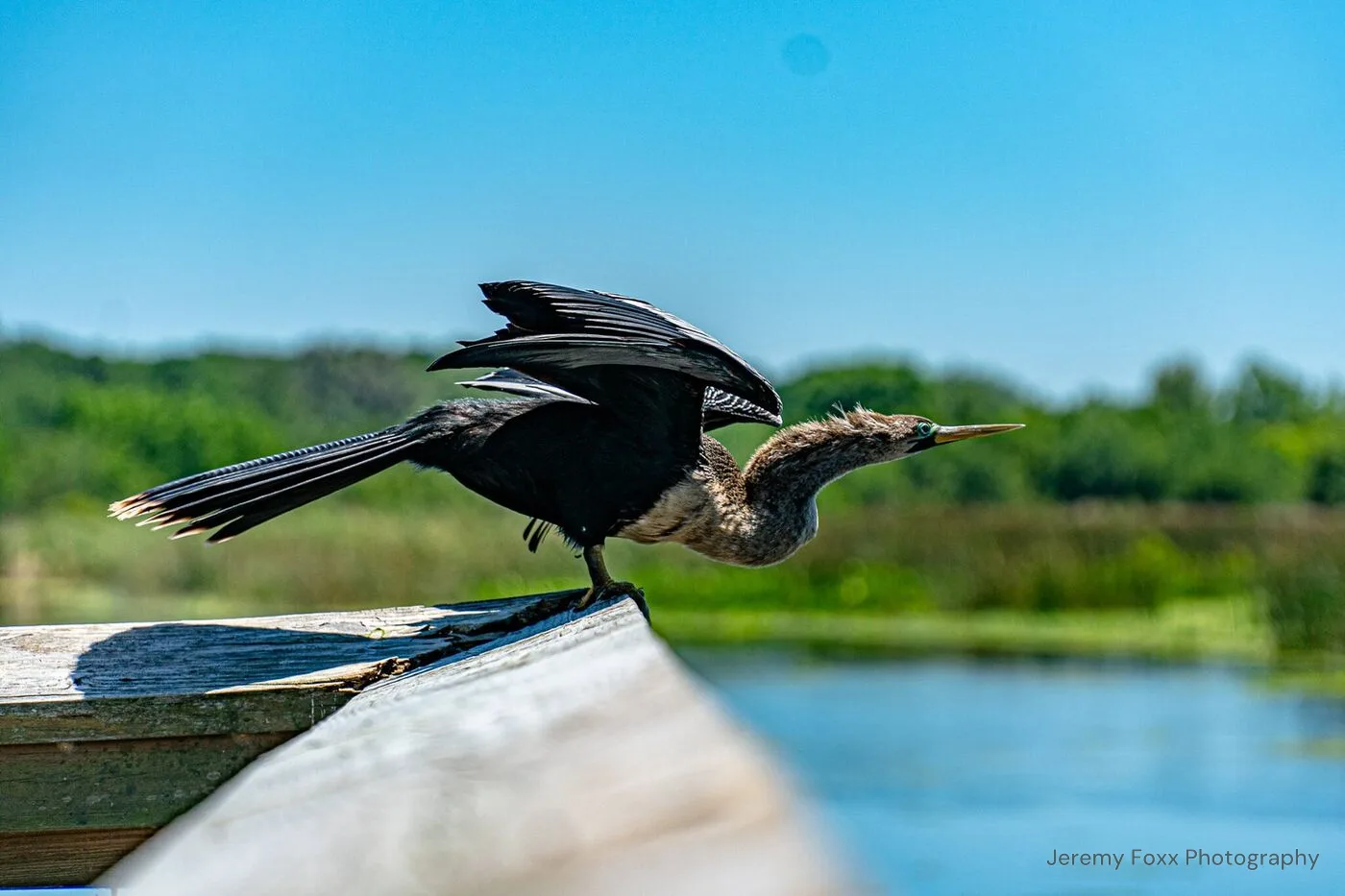
The rail
Look at the claws against the sunlit rail. This α7R II file records 1/1600 second at f/4 and ISO 100. When judging a crop for print, inspect that fine contact point before deciding how much of the water to trim.
Camera settings
Sony α7R II (ILCE-7RM2) · E PZ 18-105mm F4 G OSS · 105 mm · f/4 · 1/1600 s · ISO 100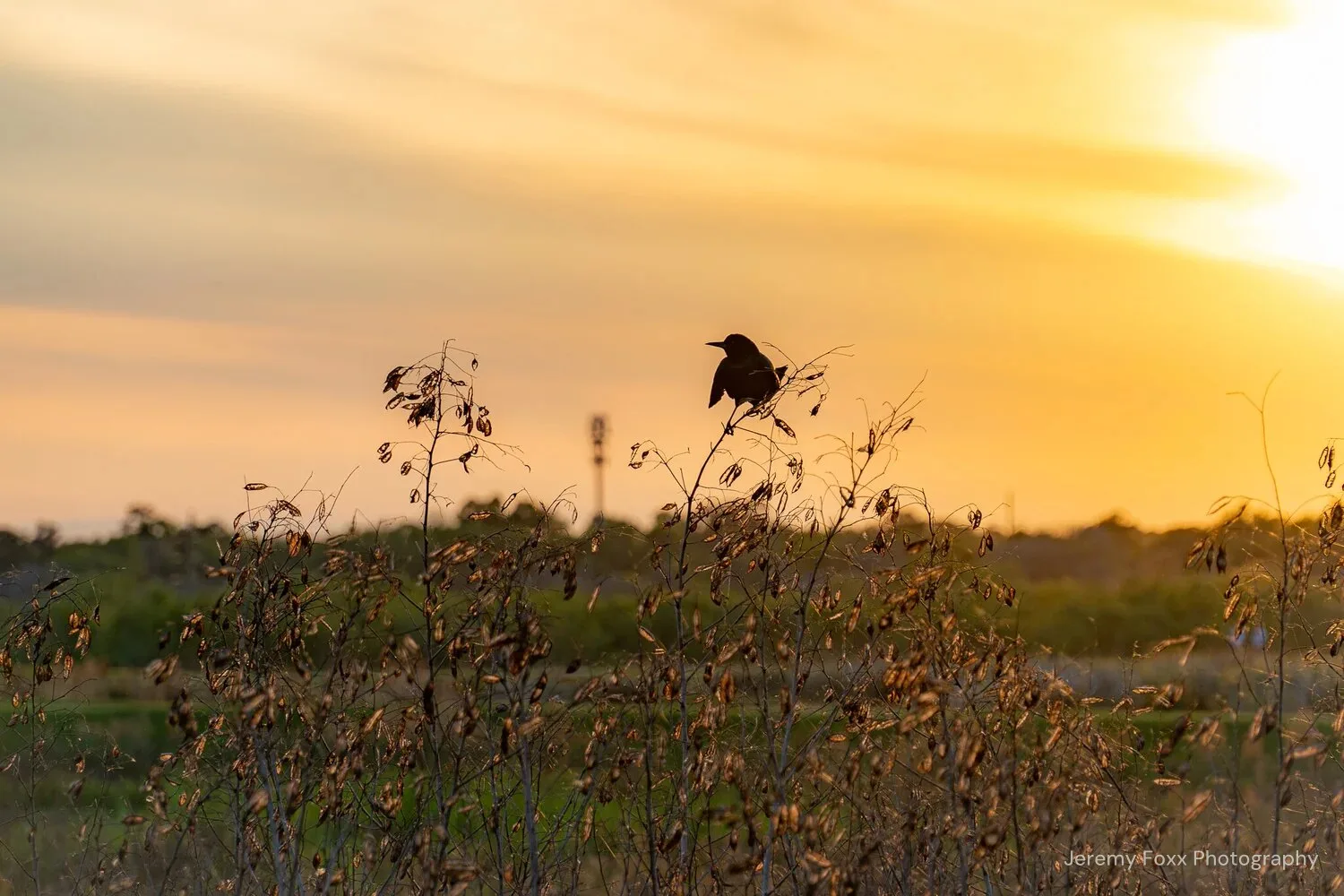
The silhouette
Here the same body recorded 1/400 second at f/4 and ISO 100. The shape of the perched bird against the sky carries the picture. When adjusting shadows, watch what happens to the outline where the bird meets the stem.
Camera settings
Sony α7R II (ILCE-7RM2) · E PZ 18-105mm F4 G OSS · 105 mm · f/4 · 1/400 s · ISO 100Where it helps
If you’re cropping the bird on the rail, zoom in on the toes before you trim the water. Can you still see where they meet the wood? This body has a 42.4-megapixel sensor. How much detail you have to work with depends on how much of the sensor you used, so start with the original file. Timing matters here, too. At its fastest burst the camera takes five photos a second. A wing can move quite a way between two frames.
How to use it
For a night shot like the Starlite, put the camera on a tripod and find a sign you can read from the sidewalk. Set up the picture before a car comes through. Make one exposure, then zoom in on a bright letter. If its edges have disappeared into a white blob, shorten the next exposure a little.
Try it yourself
Try that same corner for two passing cars. Keep the camera, shutter time, aperture and ISO in place. Start one photo as the headlights enter the frame. For the next car, wait until the lights are halfway across. Flip between the pictures and see where each line takes your eye.
What reviewers found
Imaging Resource and Digital Camera World both found that the high-resolution sensor preserved fine detail. Digital Camera World also tested moving subjects. Focus held up when there was contrast, but tracking became less predictable as contrast fell. For a print of a neon façade, the detail tests matter most. For a dancer crossing a dim stage, the tracking test is the one to read.